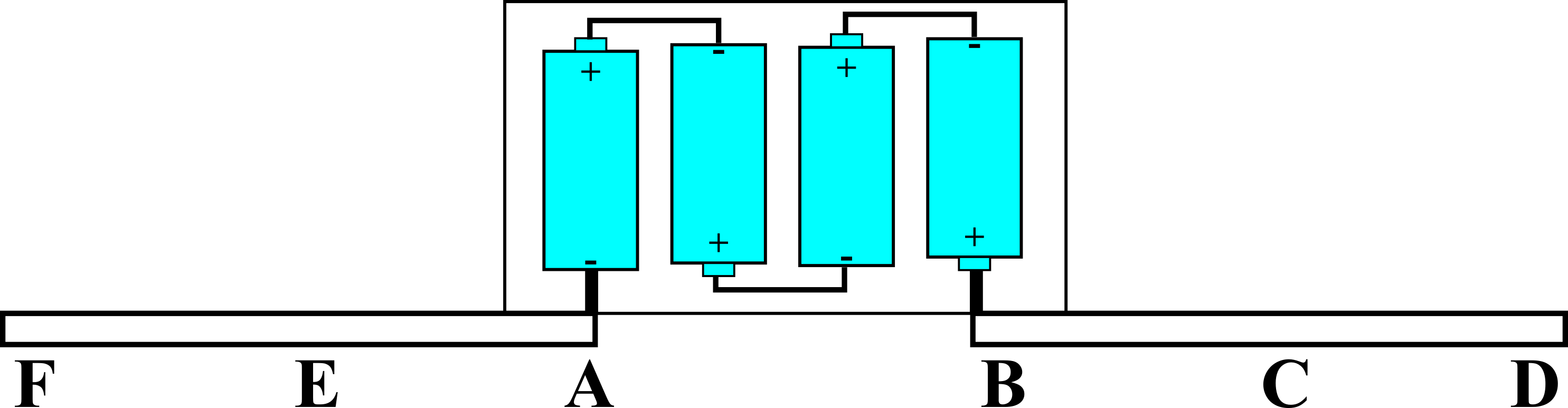
In the last couple of years, I have made good use of the “bare wire” lab for electric potential difference. I first learned a version of this lab in the Modeling curriculum for electricity and magnetism. In this activity, students measure the potential difference of bare wires connected to a battery pack, but not connected to anything else. 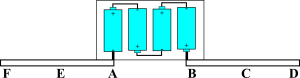
This is extremely helpful in developing the idea that a wire can have zero potential difference along its length. And in developing the idea of potential difference being a difference between two different points.
Then, students connect a long bulb and a round bulb to the battery and repeat their measurements.
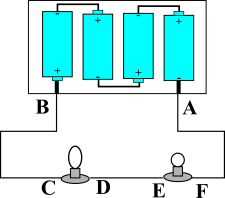
Finally, they make a graph of potential versus position.
About marcreif
I live and teach high school physics in the town I was born in, Fayetteville, Arkansas. My professional interests include modeling instruction and incorporating elements of modeling in AP Physics. I also work as a College Board Workshop Consultant, leading AP Physics Teacher workshops. I coauthored the Teacher Resource Manual for the popular textbook College Physics for the AP Physics 1 & 2 Courses, the AP Physics 2 Curriculum Module, and have contributed to other publications, including The Physics Teacher. I am an AP Physics Exam Reader, and I served as the chair of the College Board SAT Physics Test Development Committee, and a member of the College Board Science Academic Advisory Committee. I was the 2016 College Board Southwest Region AP Award recipient, and a finalist for the Presidential Award for Excellence in Science Teaching in 2021.


 marcreif

