
Forces

In the last few years, I have started the force unit off with demos, seat experiments, discussions, and conceptual questions. This year I decided to make a summary page for some of the activities we have done. They are first drafts, I can’t draw worth a darn, my handwriting is near illegible, and I unfortunately drew them on scrap paper with some dark images on the back. But, here they are. Not in any particular order.

This is an activity in which a cart with a dual-range force sensor (DFS) is wiggled back and forth in front of motion detector (MD) Students did this as a seat experiment in their groups.
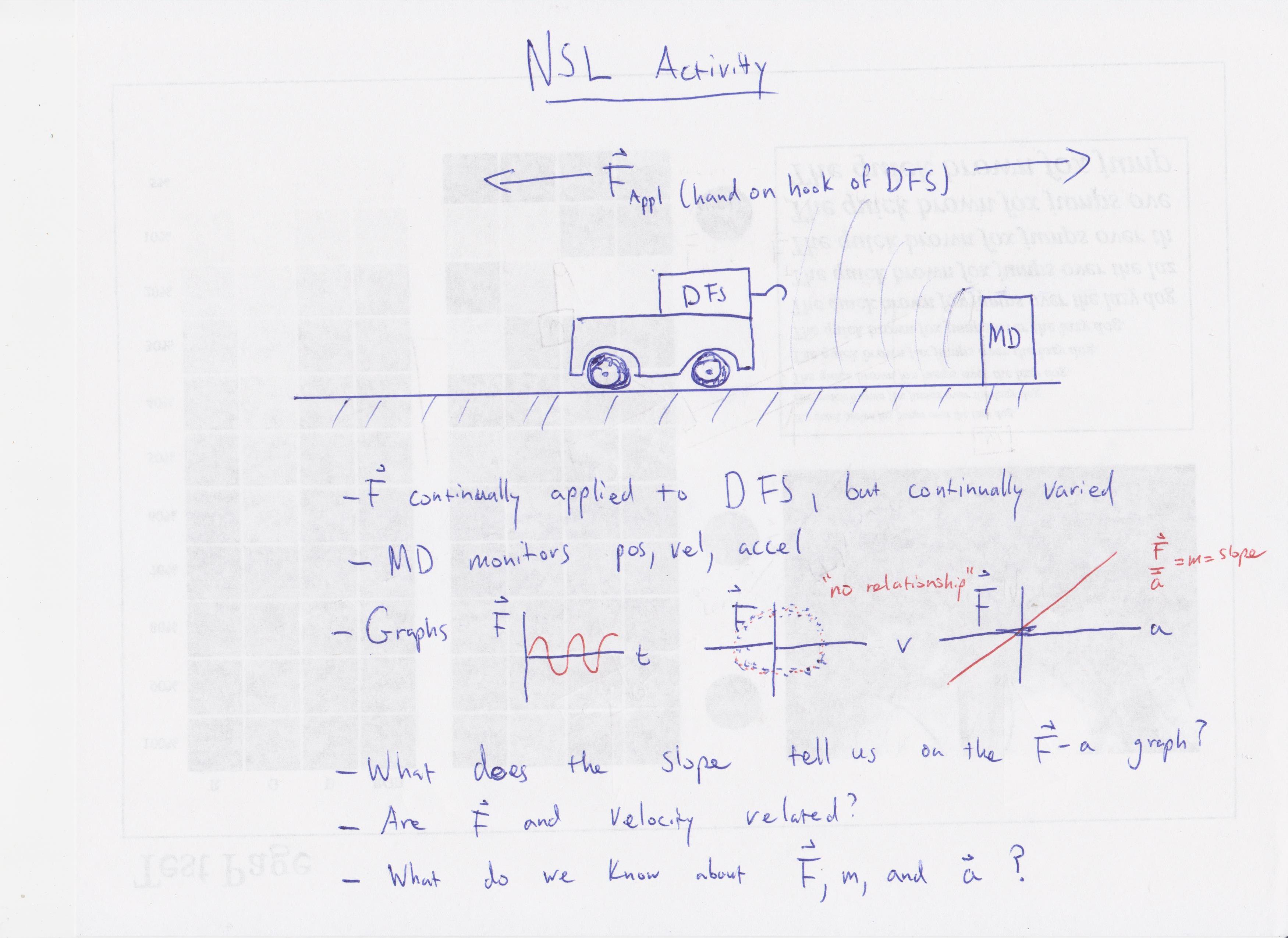
NSL

Two strings stabilize a cart on a ramp. When the ramp is removed, the cart is stationary.
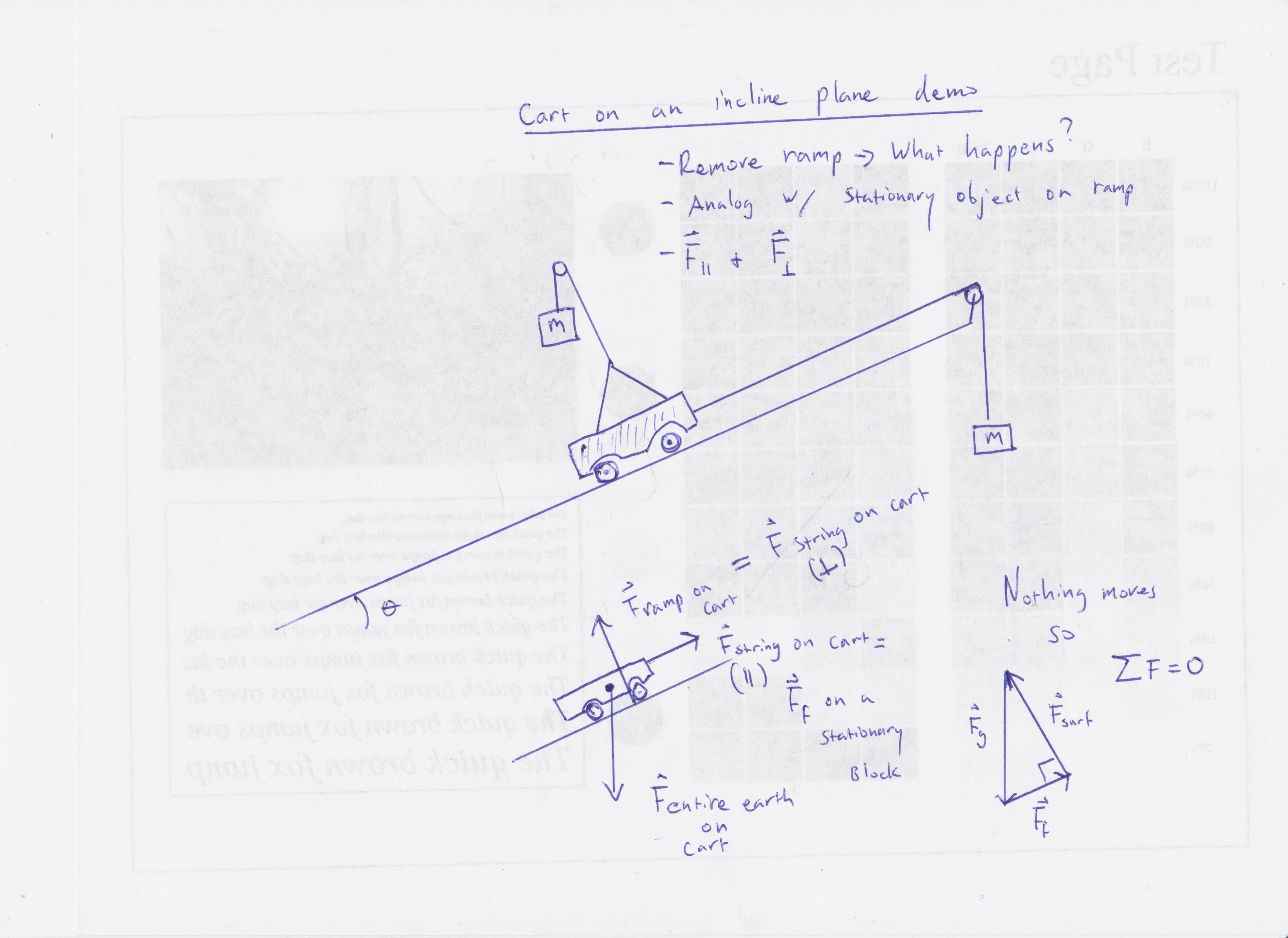
Incline Plane

Two blocks are suspended from pulleys with a spring scale inserted into the string. The students can’t see what the spring scale reads at first. This was presented as a puzzle, along with a ranking task of similar subject from this book
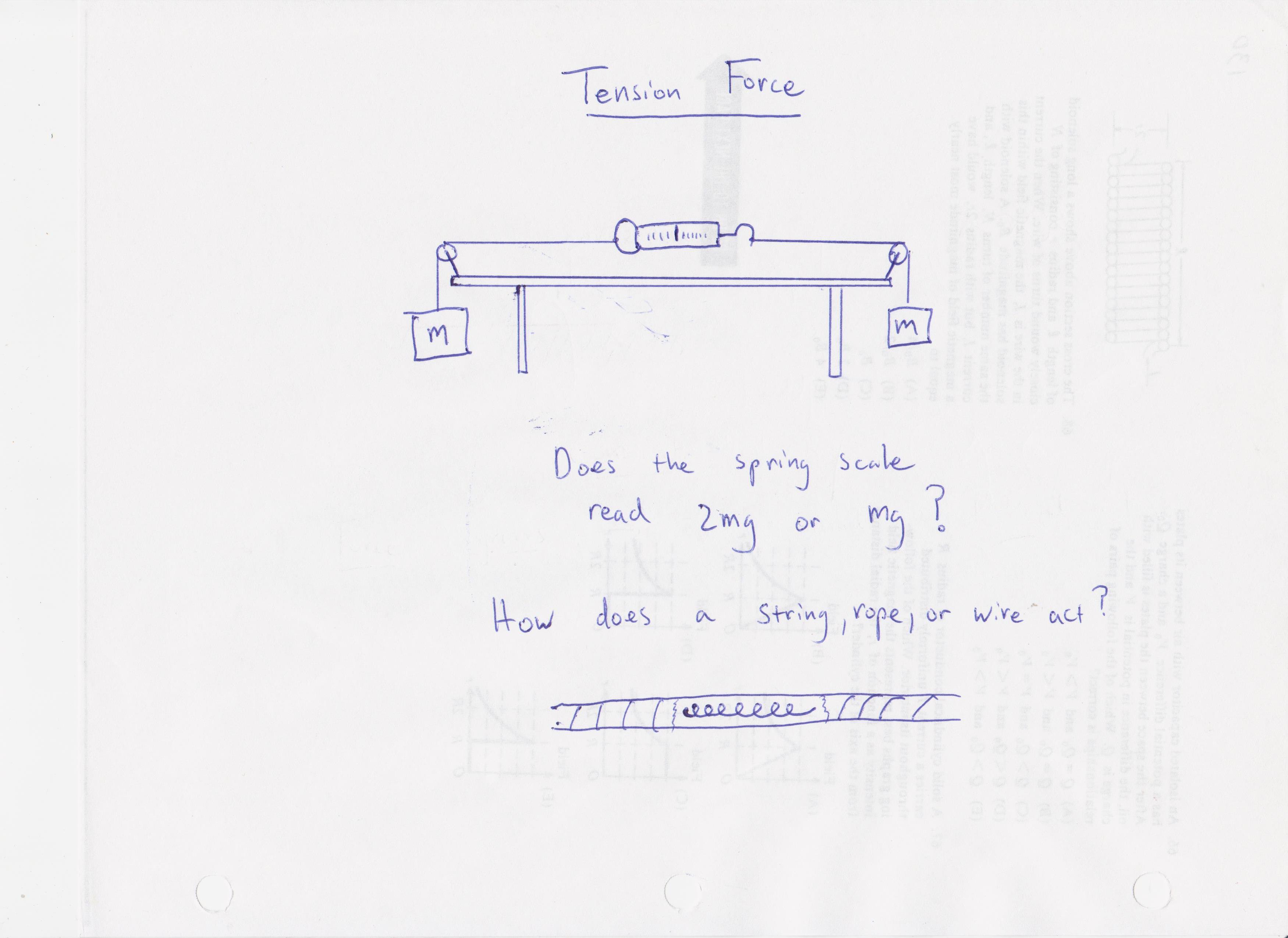
Tension Force

An optical lever magnifies the motion of the wall when a human presses on it. this was a whole-class demonstration.
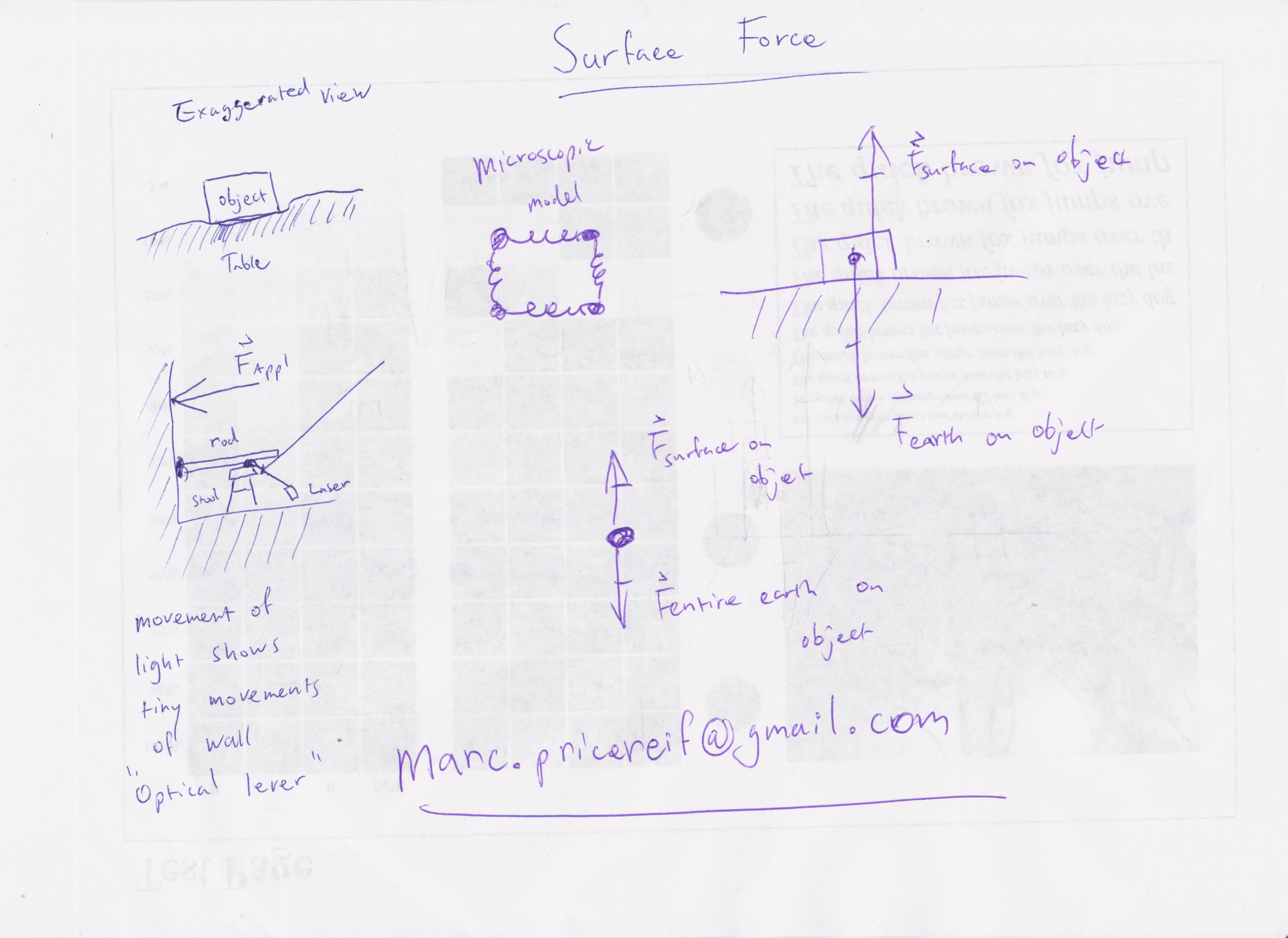
Surface Force

A student jumps off of a force plate while it is collecting data. This was also a whole-class demo.
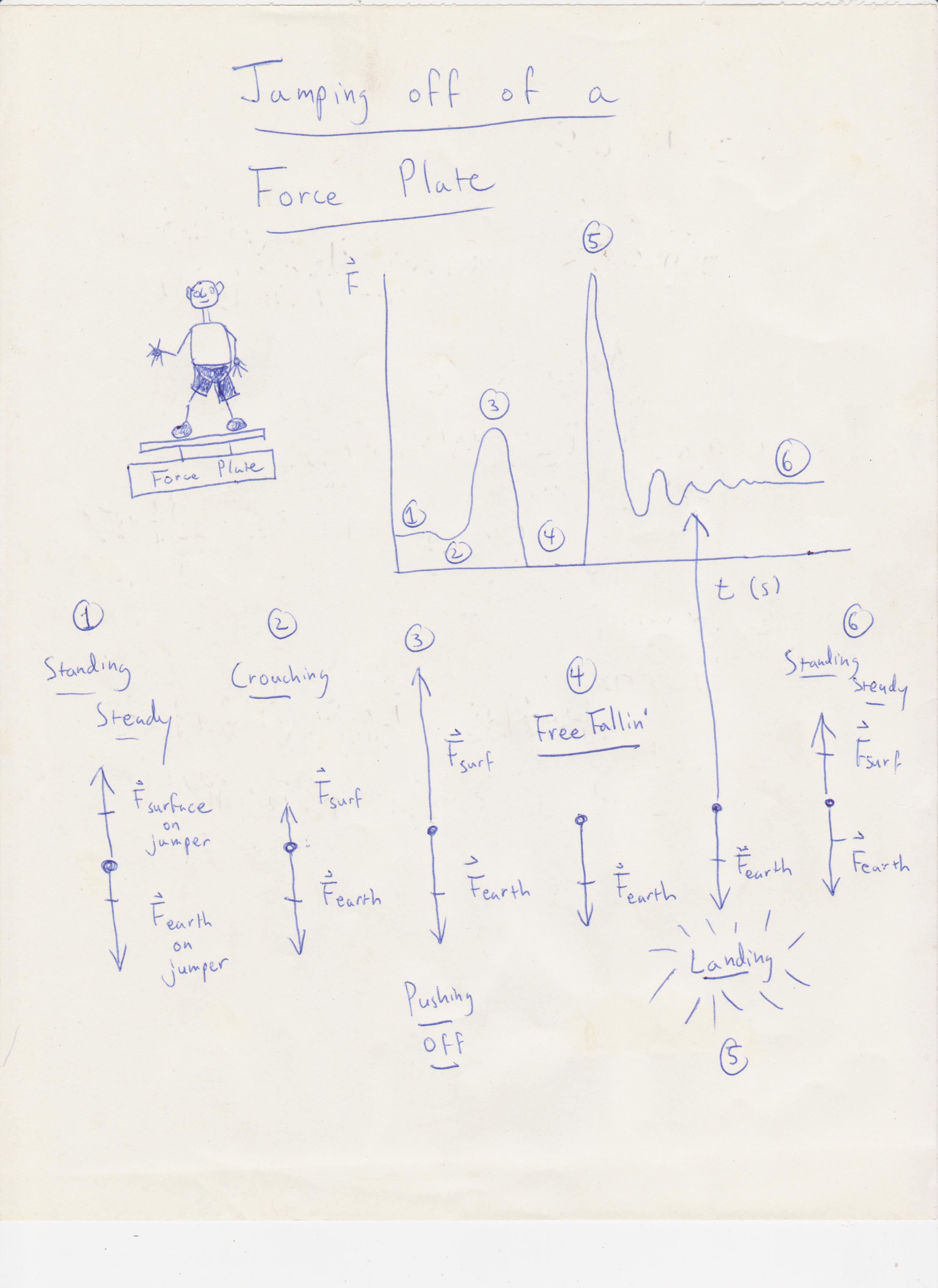
Force Plate

Several friction “seat experiments” are done with blocks, force sensors, and LabQuest 2s.
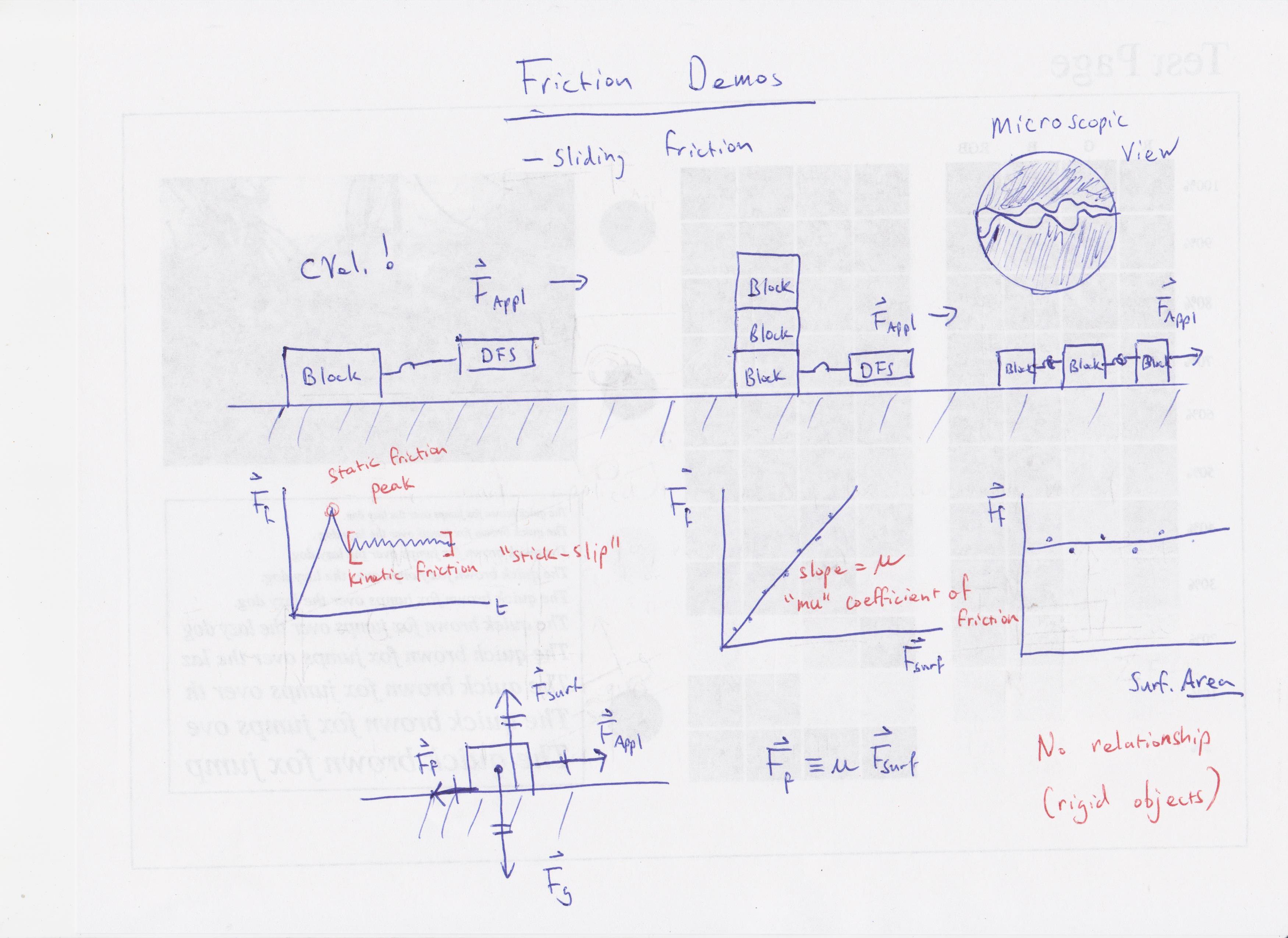
Friction

A HoverPuck (trade name “Kick Dis”) or a bowling ball is given a brief push and glides across the floor at a nearly constant velocity. This was a class activity, with a number of students participating.
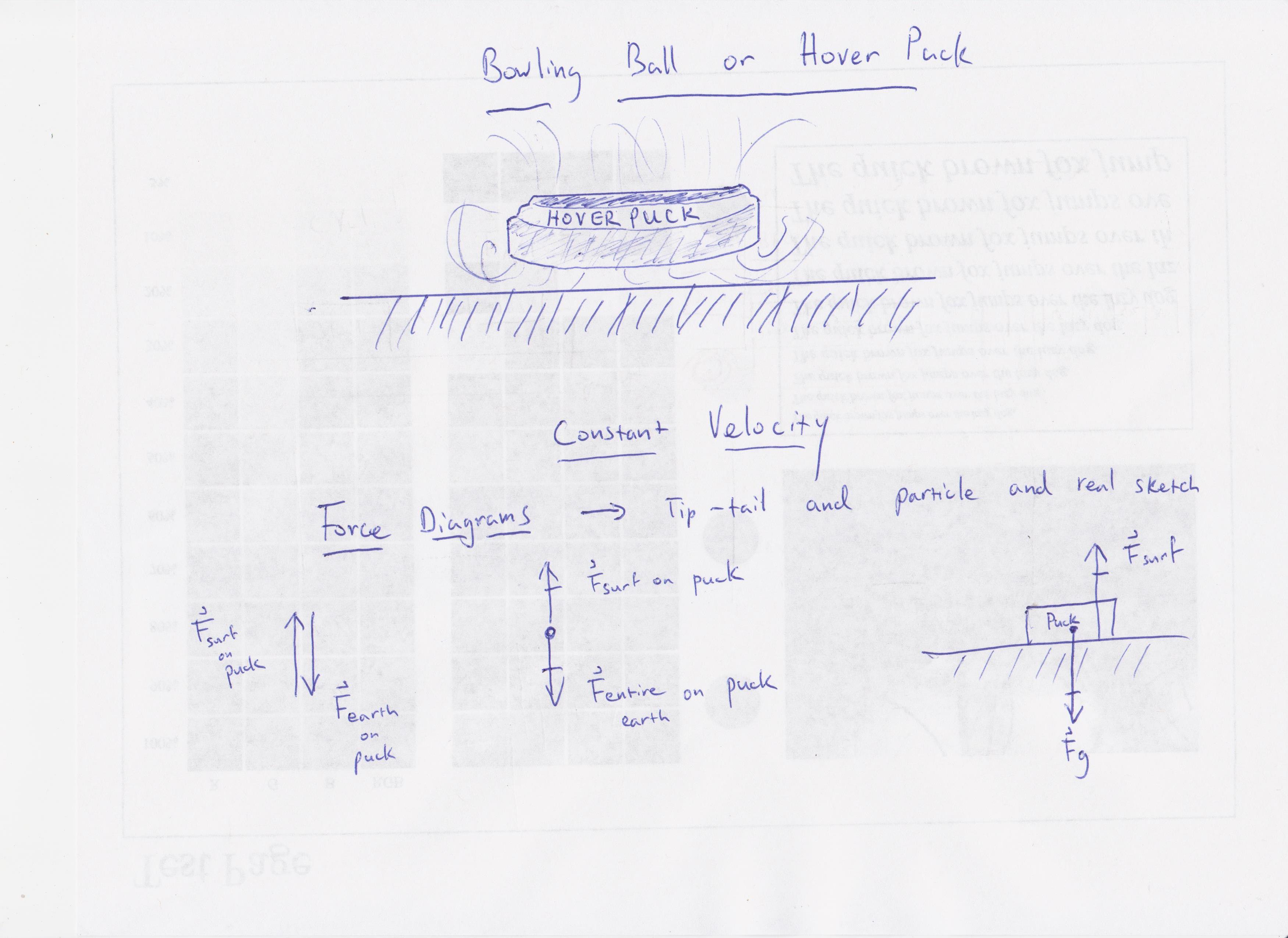
HoverPuck

A Newton’s 3rd Law demo with two force sensors and LabQuest2s was a final seat experiment.
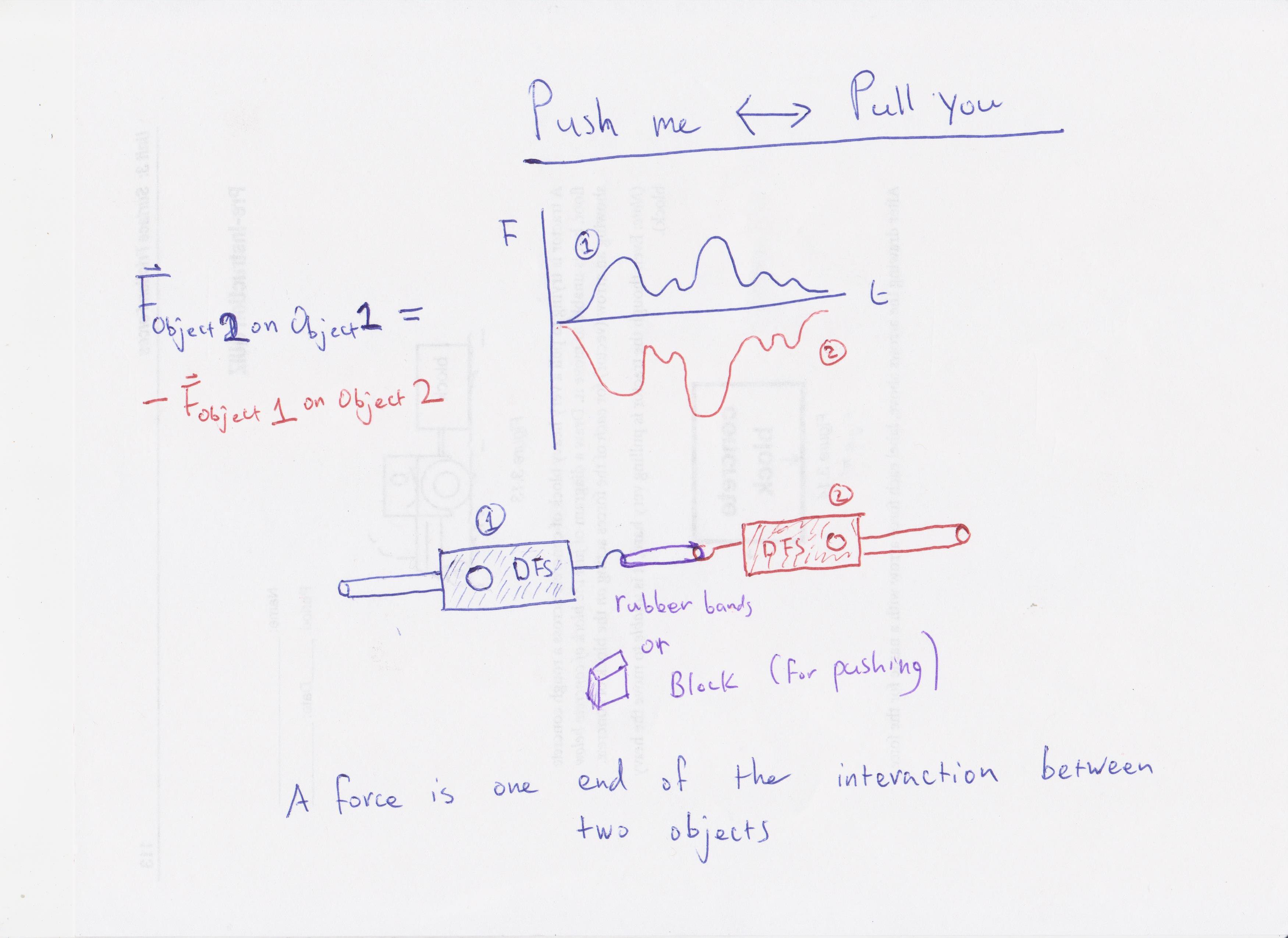
N3L_Demo

Posted in Uncategorized | Tagged , , | Leave a comment

Modeling Terminology

blinkybuggy

In teaching modeling physics, there is some terminology that is used that I have found confusing.

For instance, we (modeling teachers and authors of “Teacher’s Notes” in the modeling materials) talk about the paradigms. The paradigm is a real thing that serves as a familiar example or exemplar of a concept. So, it’s pretty clear to say, when something moves with constant velocity, that it moves like the paradigm, the blinky buggy. As long as I explain what paradigm means, and repeat it a few times throughout the year, students seem pretty comfortable with this.

The problem arises with the term model. The modeling materials tend to talk about the “Constant Velocity Model”, a “math model” (an equation), a “graphical model” (a graph of the motion). Following this terminology, I suppose you could even say something about a verbal model (a description) and a pictorial model (a motion map).

I have always found all of these many models a bit confusing.

Last year, I decided to settle on a different terminology. There is the paradigm, the conceptual model for the paradigm, and the representations of the paradigm (mathematical, graphical, verbal, and pictorial). So, instead of saying equation or math model, I would refer to “mathematical representation.” Or instead of graph or graphical model, I say “graphical representation.” These are representations of the conceptual model.

So far, so good. Before, students seemed confused by talking about the Constant Velocity Model, the math model for constant velocity, and the graphical model for constant velocity. When I say representation, they haven’t hesitated, acted confused, or asked what I mean. And some have used the term themselves. I don’t remember many using the terms math model or graphical model so early in the year.

Perhaps old hat to everybody else, but it pleased me to figure this out.

Posted in Uncategorized | Tagged , , , | Leave a comment

Diff. Eq Review/Cheat Sheet for APPC

Please check it for errors, comments. It doesn’t show solutions for everything, just how to set stuff up. I have mixed feelings about posting this or giving it to students:

1. Likely it’s full of errors that some won’t catch.
2. They really ought to be doing this sort of thing themselves.
3. Some will try to memorize without understanding – a tactic of little value.

Anyway, here it is.
DiffEQN_CheatSht 001

Posted in AP Physics C, Calculus Applications | Tagged , , | Leave a comment

APlusPhysics – Maxwell’s Equations

Dan Fullerton on Maxwell’s equations, nice summary of what you need to know for AP Physics C E and M exam.

Posted in E and M, Maxwell's Equations, Uncategorized | Leave a comment

Dan Meyer – “Math Class Needs a Makeover”

worth watching for both teachers and students


Posted in about teaching and learning | 1 Comment