A paradigm is a “model, pattern, example, exemplar, template, standard, prototype, archetype.” In modeling instruction, they are typically a demonstration or lab setup that serves to focus student attention on what is important in the unit. Paradigms are presented as the subject of a student-designed lab that is usually done at the beginning of the unit, and serves to help develop the conceptual model(s) for the unit.
If in-person school is not possible, I intend to make short videos showing the data collection of each lab. Students will “collect” the data from the video and analyze it at home.
Next year I will be teaching Mechanics as a full-year course, so there should be enough time to do all (or at least most) of these labs.
Unit 1:Kinematics
Lab 1 – Introductory lab – Three linear paradigms in one lab
Constant Velocity Model – Blinky Buggy toy moves with constant velocity
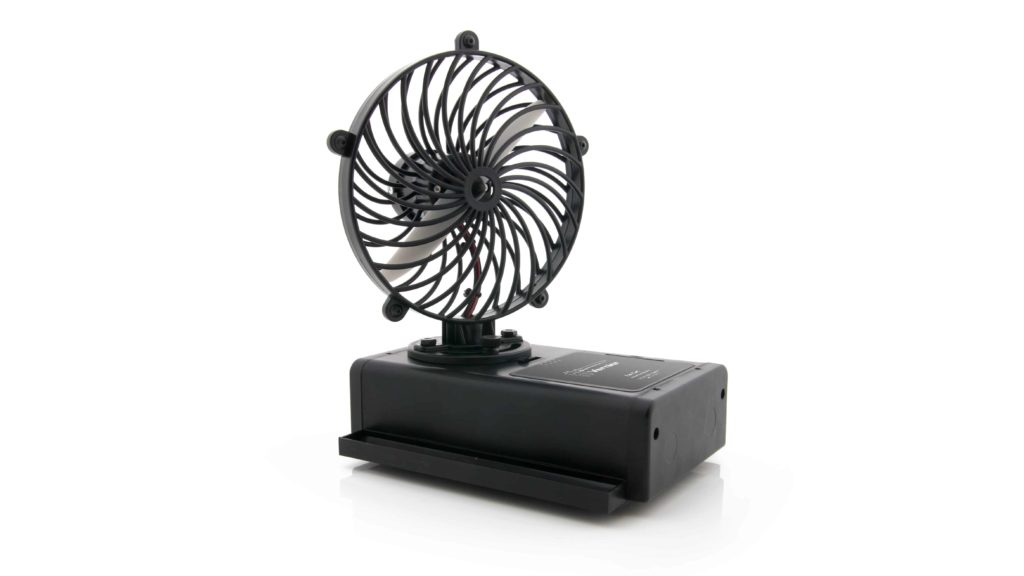
Constant Acceleration Model (possibly with vectors) – Physics Fan cart moves with constant acceleration. Fan may be modified by changing angle and speed.
Non-constant Acceleration Model – Sliding Chain (over a pulley) breaking the constant acceleration model.
Lab 2 – Another paradigm later on:
Circular Motion Model – (The Knight Textbook works a bit of circular motion into 2-d kinematics) – Rotating wheel slowing with constant acceleration. Probably use a Vernier Rotary Motion Sensor with an attachment. Another possibility is a bicycle wheel.
Unit 2: Newton’s Laws of Motion
Lab 3 – Introductory lab
Constant Net Force Model – Fan Cart (with fan directed at angles for vectors). Develop Newton’s Second Law.
Labs 4 and 5 – Later on
Connected Objects Model – Atwood’s Machine, collect a data set using the materials from which the gravitational field strength of Earth can be derived.

Non-uniform Force Model – Falling Coffee Filters (Is the drag force proportional to v or v2 ?)
Unit 3: Work, Energy, and Power
Lab 6 – Introductory lab
Energy Transfer Models – Work on a spring transfers to kinetic energy (with Pasco Spring Cart Launcher); Work on Earth’s g-field transfers to kinetic energy. Collect data with Dynamics Carts, Dual-Range Force Sensors and Motion Detectors.

Lab 7 – Later on
Energy Dissipation Model – Ball Bounce Lab. What does the position vs. time data of a bouncing ball tell us about energy dissipation?
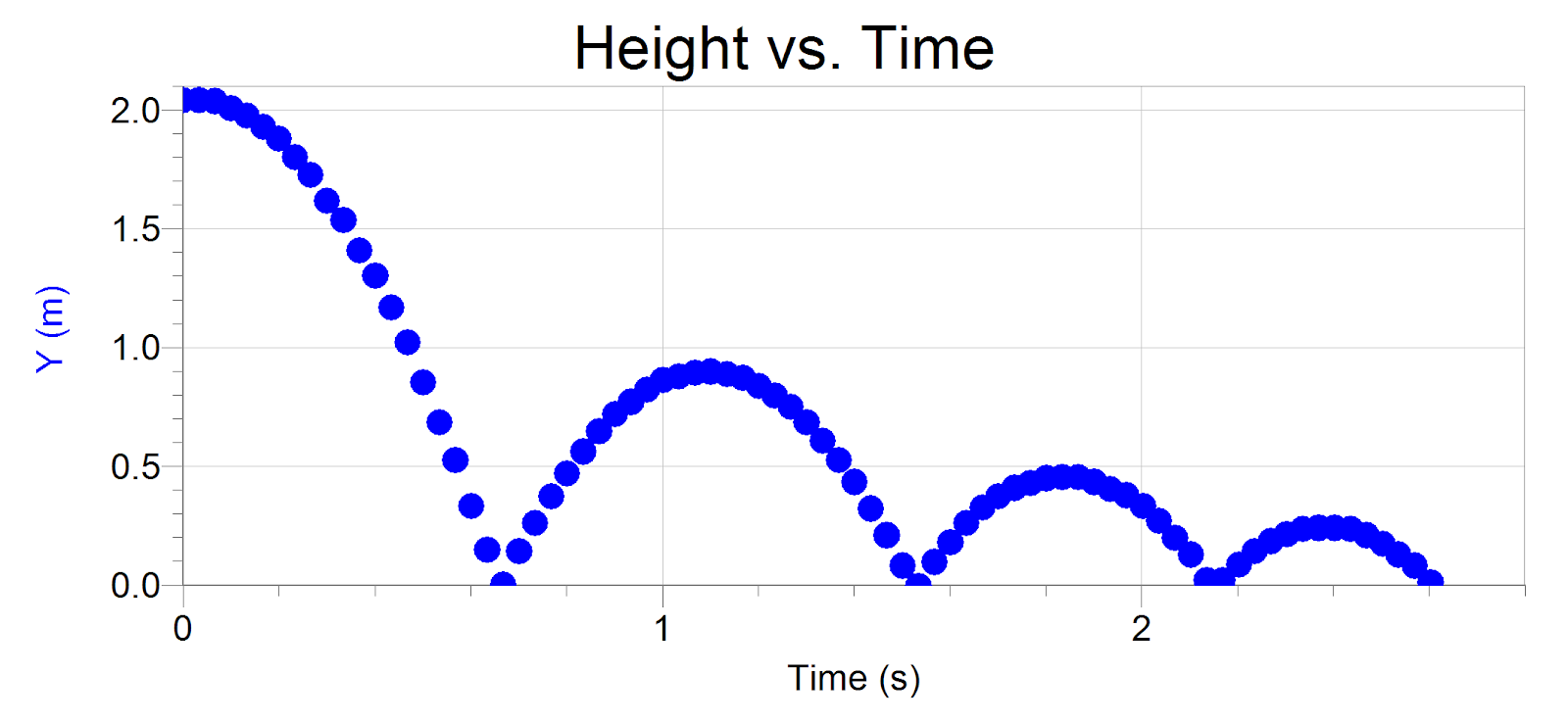
image from Frank Noschese’s Blog
Unit 4: Systems of Particles and Linear Momentum
Lab 8 – Introductory lab
Impulse-Momentum Transfer Model – Force-time during a collision and change in Momentum. Using dynamics carts, Vernier Bumper-Launcher Kit (and maybe Pasco Spring Cart Launcher)

Lab 9 – Later investigation
Modeling Collisions – Dynamics Cart collisions in one dimension
Unit 5: Rotation
Lab 10 – Introductory Lab
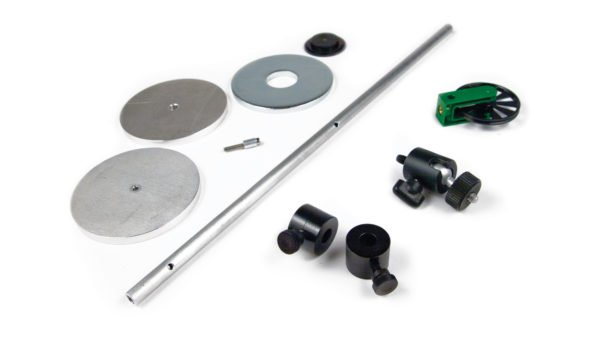
Extended Object Model – Rotational Inertia and Angular Acceleration. Vernier Rotary Motion Sensor and accessory kit again.
Unit 6: Oscillations
Lab 11 – Introductory Lab
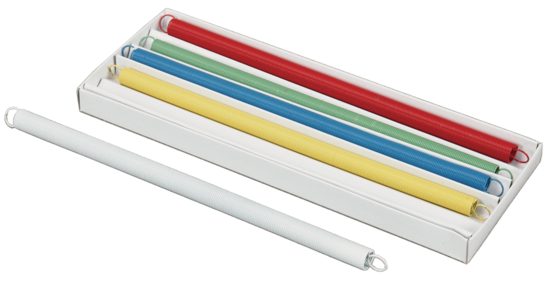
Simple Harmonic Oscillator Model – Dependent variables that affect period/frequency of a mass-spring system. I like Pasco Springs for this. Equal Length and Hooke’s Law Set. They look the same, but are different:
Lab 12 – Later on
Physical Pendulum Model – Dependent variables that affect period/frequency of an extended object pendulum. Vernier Rotary Motion Sensor and Accessory kit, again.
Unit 7: Gravitation
Lab 13 – Introductory Lab
Universal Gravitation Model – Cavendish Balance (classroom demonstration, I don’t have the money to buy a balance that provides quantitative results). Thinking of either setting up my own for demo purposes, or showing the YouTube videos of other’s.
Questions or comments? Other ideas? Please share!

 marcreif
 fysicsfool